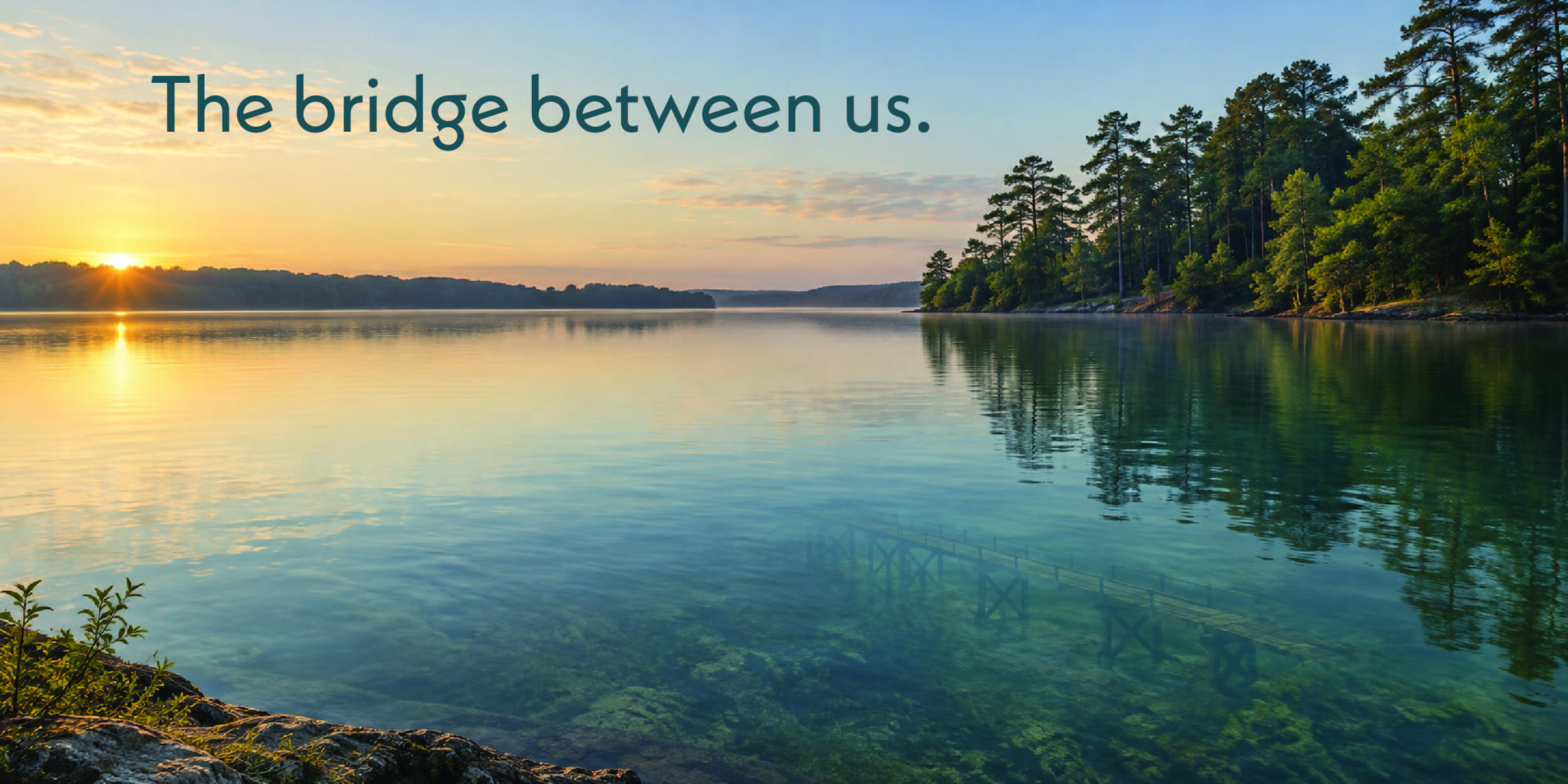

Innovation often requires the courage to step where there isn’t a clear path yet.
I climbed as high as I could, which was just high enough to stretch across a branch that reached into the neighboring tree. From the ground, those two trees looked far apart. But high in the canopy, their branches touched.
At ten years old, I had watched other kids make the crossing. No one fell. No branches broke. I asked myself, “How hard can it be?”
So I climbed.
That phrase has followed me ever since: How hard can it be? It’s often the doorway into something new, something uncertain, and occasionally something worth doing.
That day, I made it across. But when I climbed down, I realized no one had seen me do it. No witnesses. No shared moment. No one to believe the story or learn from it.
That realization hit hard, even more than the sweet joy of success when my feet touched the ground.
The lesson has stayed with me.
Recently, I spent two days in a meeting of executives from national organizations working in the interpersonal violence arena—from domestic violence to trafficking. The room was full of ideas and stories. A few funders listened carefully for the intersections. We were all looking for branches from one tree to another.
I was reminded that whether you’re a donor or a nonprofit leader, ideas rarely succeed alone. They need witnesses. They need encouragers. They need people willing to stand at the base of the tree and say, “Go ahead. Try it. We’re here.”
Why ideas need more than inspiration
In the nonprofit world, ideas are rarely the problem. Vision is abundant. What’s often scarce is the support system that allows an idea to move from possibility to reality.
Too often, a promising idea fades because it never finds the right combination of belief, resources, and partnership.
Three words often define the donors who step into that gap: risk, innovation, and impact.
These aren’t abstract concepts. They are decision filters. They shape where money goes, what gets tried, and ultimately what changes.
For donors, they represent opportunity. For nonprofits, they represent responsibility.
What donors should consider
- Risk: Are you willing to support something that isn’t fully proven? Early-stage ideas rarely come with guarantees. They come with potential.
- Innovation: Do you find energy in new approaches? Innovation often looks messy at the beginning. It challenges existing systems and asks better questions before offering answers.
- Impact: Do you want to see measurable change? Impact-minded donors look beyond activity and ask what difference is truly being made.
- Engagement: Are you willing to go beyond writing a check? The most effective donors ask questions, build relationships, and stay curious about the work.
- Patience: Can you give an idea time to develop? Real change rarely happens on a short timeline. It requires space to test, learn, and adjust.
What nonprofits should consider
- Clarity of purpose: Can you clearly explain the problem you are solving and why it matters? Donors cannot support what they do not understand.
- Defined innovation: What exactly is new or different about your approach? Innovation should be specific, not just aspirational language.
- Evidence of impact: How will you measure success? Even early-stage efforts should have a way to track progress and learning.
- Transparency about risk: Are you honest about what might not work? Credibility grows when organizations acknowledge uncertainty and plan for it.
- Invitation to engage: Are you creating space for donors to be part of the journey? Engagement builds trust and strengthens outcomes.
- Capacity to adapt: Can you adjust when something isn’t working? Innovation without flexibility quickly becomes frustrating.
Why witnesses matter
When I climbed that tree the first time, the accomplishment felt incomplete because no one saw it happen.
So I climbed again.
This time, there were friends below. They watched. They cheered. And afterward, they climbed too.
That second climb mattered more—not because it was harder, but because it was shared.
Innovation in the nonprofit sector works the same way. It gains strength when it is visible, supported, and repeated. Donors become witnesses to the work. Nonprofits become guides for others who follow.
And over time, what once felt risky becomes a proven path.
Where to begin
If you are a donor, look for something that stretches you just a bit—an idea that isn’t fully formed but carries the possibility of real change.
If you are a nonprofit leader, invite others into your work earlier. Share your ideas and your thinking.
Curiosity is the starting point. Interest builds connection. Action creates change.
The next step
Somewhere near you, an idea is waiting for support. It may be small. It may be unproven. It may feel like a long shot.
Find the branch that stretches just far enough to reach something new. Step onto it with intention. And make sure someone is there to witness what happens next.
Because the most meaningful impact rarely comes from staying in the tree you already know.
Read it. Share it. Pass it on.
If you have a question or a topic you would like to see explored in future posts, please reach out to me.
Website: www.dawnfranks.com
Email: dawn@dawnfranks.com
Facebook: https://www.facebook.com/dawfranks/
LinkedIn: www.linkedin.com/in/dawn-franks-strategicsolutions/